Web development frameworks have revolutionized how we build websites and applications. These powerful tools provide pre-built components, structures, and best practices, significantly accelerating development and enhancing code quality. From streamlining complex tasks to ensuring consistent design, frameworks empower developers to create robust, scalable, and maintainable projects across diverse platforms. This exploration delves into the core concepts, popular choices, and future trends shaping this dynamic field.
We will examine both front-end and back-end frameworks, comparing popular options like React, Angular, Vue.js, Node.js, Django, and Laravel. We’ll discuss their strengths, weaknesses, and ideal use cases, guiding you through the process of selecting the right framework for your specific project needs. Furthermore, we’ll cover essential best practices for security, maintainability, and performance optimization.
Backend Frameworks and Their Role
Backend frameworks are the engines that power web applications, handling server-side logic, database interactions, and API requests. They provide structure and tools to efficiently manage the data and processes that underpin a website’s functionality, allowing developers to focus on building features rather than reinventing the wheel for fundamental tasks. Choosing the right backend framework depends heavily on project requirements, team expertise, and scalability needs.Backend frameworks handle crucial server-side operations, including data processing, security, and user authentication.
They act as intermediaries between the frontend (what the user sees) and the database (where data is stored). This separation of concerns improves code organization, maintainability, and allows for parallel development of frontend and backend components.
Popular Backend Frameworks: Node.js, Django, and Laravel
Node.js, Django, and Laravel represent distinct approaches to backend development, each with its strengths and weaknesses. Node.js, built on JavaScript, offers a non-blocking, event-driven architecture, making it ideal for real-time applications and applications requiring high concurrency. Django, a Python framework, emphasizes rapid development and clean, maintainable code through its “batteries-included” philosophy, providing many built-in features. Laravel, a PHP framework, prioritizes elegance and developer experience, offering a robust ecosystem of tools and packages.
Interaction Between Frontend and Backend Frameworks
The interaction between frontend and backend frameworks is primarily achieved through APIs (Application Programming Interfaces). The frontend makes requests to the backend API, which processes the request, interacts with the database if necessary, and sends a response back to the frontend. This response is then used to update the user interface.Common integration patterns include:
- RESTful APIs: The most prevalent pattern, using HTTP methods (GET, POST, PUT, DELETE) to interact with resources. For example, a frontend might use a GET request to retrieve a list of blog posts from a Django backend API, then display them on the webpage.
- GraphQL APIs: A more flexible alternative to REST, allowing the frontend to request precisely the data it needs, reducing over-fetching and under-fetching issues. A React frontend might use a GraphQL query to fetch only the necessary user details from a Node.js backend, improving performance.
- WebSockets: Used for real-time, bidirectional communication between the frontend and backend. A chat application might use WebSockets to allow instant messaging between users, with the frontend using a WebSocket library to communicate with a Laravel backend.
Frontend-Backend Interaction Architecture Diagram
Imagine a simple diagram. On the left, we have the Frontend (e.g., a React application) represented by a box labeled “Frontend.” Arrows point from the Frontend box to a central box labeled “API Gateway/Backend.” This central box represents the backend framework (e.g., Node.js, Django, or Laravel) and its API. From this central box, more arrows point to a box labeled “Database” (e.g., PostgreSQL, MySQL, MongoDB).
The arrows represent the flow of requests and responses. The Frontend sends requests to the API Gateway/Backend, which then interacts with the Database to retrieve or store data, and finally sends the response back to the Frontend. This illustrates the clear separation of concerns between the presentation layer (Frontend), the business logic (Backend), and the data storage (Database).
The API Gateway/Backend acts as a crucial intermediary, handling requests, authentication, and data transformation before interacting with the Database. The diagram visually represents the client-server model, highlighting the interaction between the user interface and the server-side components responsible for data management and application logic.
Framework Selection Criteria
Choosing the right web development framework is crucial for project success. The ideal framework depends heavily on a project’s specific needs and constraints. A poorly chosen framework can lead to increased development time, higher costs, and reduced performance. Careful consideration of several key factors is therefore essential.
Decision-Making Flowchart for Framework Selection
A structured approach to framework selection improves the chances of choosing the optimal solution. The following flowchart illustrates a decision-making process:
                                    Start
                                      |
                      -------------------------------------
                      |                   |                  |
                Project Requirements     Scalability Needs   Team Expertise
                      |                   |                  |
                      V                   V                  V
           Performance Critical?
   High Scalability?     Framework Familiarity?
                      |                   |                  |
                      V                   V                  V
      Yes: Prioritize Performance     Yes: Choose Scalable  Yes: Use Known Framework
      No: Balance Features           No: Consider Others     No: Consider Learning Curve
                      |                   |                  |
                      V                   V                  V
          Framework Evaluation         Framework Evaluation    Framework Evaluation
                      |                   |                  |
                      V                   V                  V
                Select Framework        Select Framework        Select Framework
                      |
                      V
                    End
This flowchart guides developers through key considerations, prioritizing aspects like performance, scalability, and team proficiency.
Each decision point directs the selection process toward the most appropriate framework based on the project’s specific context.
Factors to Consider When Choosing a Framework
The following table Artikels crucial factors influencing framework selection:
| Factor | Description/Importance |
|---|---|
| Performance | The framework’s speed and efficiency in handling requests. High performance is crucial for applications with high traffic or real-time requirements. Metrics like request processing time and resource utilization are key indicators. |
| Scalability | The ability of the framework to handle increasing workloads and user traffic. A scalable framework can adapt to growth without significant performance degradation. Consider horizontal and vertical scaling capabilities. |
| Security | The framework’s built-in security features and its ability to protect against common vulnerabilities. Robust security is essential for protecting user data and maintaining application integrity. |
| Community Support | The size and activity of the framework’s community. A large and active community provides access to ample resources, support, and readily available solutions to problems. |
| Ease of Use and Learning Curve | The framework’s simplicity and ease of learning. A steeper learning curve might increase development time and require more experienced developers. |
| Cost | The overall cost associated with using the framework, including licensing fees, development time, and maintenance costs. Open-source frameworks often offer significant cost advantages. |
| Ecosystem | The availability of third-party libraries, tools, and integrations. A rich ecosystem simplifies development and accelerates project completion. |
| Documentation | The quality and comprehensiveness of the framework’s documentation. Clear and thorough documentation significantly reduces development time and improves maintainability. |
Evaluating Framework Performance and Scalability
Evaluating performance and scalability requires a multifaceted approach. Benchmarking tests using realistic workloads can provide quantitative data on response times and resource consumption under various load conditions. For example, simulating high traffic using tools like k6 or Locust can assess a framework’s ability to handle concurrent requests. Analyzing metrics such as request latency, throughput, and CPU/memory utilization helps determine the framework’s performance capabilities.
Scalability can be assessed by testing the framework’s ability to handle increased data volumes and user traffic. This can involve scaling the application horizontally (adding more servers) or vertically (increasing resources on a single server) and observing the impact on performance. Real-world examples include Netflix’s use of microservices architecture for scalability, or the use of load balancers to distribute traffic across multiple servers in high-traffic applications.
Web Development Best Practices
Building robust and scalable web applications requires adherence to established best practices. These practices ensure not only the functionality and performance of the application but also its security and long-term maintainability. By incorporating these principles from the outset, developers can significantly reduce technical debt and improve the overall development lifecycle.
Implementing best practices early minimizes future problems and improves the development process. This includes careful planning, consistent coding styles, and a proactive approach to security.
Secure Coding Practices
Security should be a primary concern throughout the entire development process. Frameworks provide built-in security features, but developers must actively utilize them and follow secure coding principles to prevent vulnerabilities.
- Input Validation and Sanitization: Always validate and sanitize all user inputs before using them in database queries or other parts of the application. This prevents SQL injection and cross-site scripting (XSS) attacks.
- Output Encoding: Encode all data displayed to the user to prevent XSS attacks. Frameworks often provide helper functions for this purpose.
- Authentication and Authorization: Implement robust authentication and authorization mechanisms to control access to sensitive resources. Utilize established security protocols and avoid storing sensitive information in plain text.
- Regular Security Audits and Penetration Testing: Conduct regular security audits and penetration testing to identify and address vulnerabilities before they can be exploited.
- Use of HTTPS: Always use HTTPS to encrypt communication between the client and the server, protecting sensitive data from eavesdropping.
Code Organization and Maintainability
Well-organized code is crucial for maintainability and collaboration. Following consistent coding styles and using appropriate design patterns greatly simplifies the development and maintenance process.
- Modular Design: Break down the application into smaller, independent modules to improve code reusability and maintainability.
- Consistent Coding Style: Adhere to a consistent coding style throughout the project to improve readability and reduce errors.
- Version Control: Use a version control system (e.g., Git) to track changes, collaborate effectively, and easily revert to previous versions if necessary.
- Code Reviews: Conduct regular code reviews to identify potential bugs and improve code quality.
Testing and Documentation
Thorough testing and comprehensive documentation are essential for building reliable and maintainable web applications. Frameworks often integrate with testing frameworks, simplifying the testing process.
- Unit Testing: Write unit tests to verify the functionality of individual components.
- Integration Testing: Test the interaction between different components of the application.
- End-to-End Testing: Test the entire application flow from start to finish.
- Comprehensive Documentation: Create clear and concise documentation explaining the application’s architecture, functionality, and usage.
Common Security Vulnerabilities and Framework Mitigation
Understanding common web application vulnerabilities is crucial for building secure applications. Frameworks help mitigate these vulnerabilities through built-in security features and best practices.
- SQL Injection: Frameworks often provide parameterized queries or other mechanisms to prevent SQL injection attacks. This prevents malicious SQL code from being executed.
- Cross-Site Scripting (XSS): Frameworks usually offer built-in functions for escaping or encoding user inputs, preventing malicious scripts from being injected into the application.
- Cross-Site Request Forgery (CSRF): Frameworks often provide mechanisms to protect against CSRF attacks, such as using tokens to verify requests.
- Session Management Vulnerabilities: Frameworks typically offer secure session management features to prevent session hijacking and other attacks.
The Future of Web Development Frameworks
The landscape of web development frameworks is in constant flux, driven by the rapid advancements in technology and the ever-evolving needs of developers and users. Understanding these emerging trends is crucial for anyone involved in building and maintaining web applications, ensuring they remain competitive and relevant in the dynamic digital world. This section will explore some key trends shaping the future of web development frameworks, highlighting both the opportunities and challenges they present.Emerging Trends and Technologies Impacting Web Development FrameworksServerless computing, artificial intelligence (AI), and machine learning (ML) are significantly impacting how web development frameworks are designed and utilized.
Serverless architectures, for example, allow developers to focus on code functionality without managing servers, leading to increased efficiency and scalability. AI/ML integration is enabling the creation of intelligent web applications capable of personalized experiences, predictive analytics, and automated tasks. These technologies are not just additions; they are fundamentally reshaping the architectural principles and capabilities of modern frameworks.
Innovative Applications of Modern Web Development Frameworks
Modern web development frameworks are being used to create innovative applications across various sectors. The integration of AI and serverless technologies allows for sophisticated and scalable solutions previously unimaginable.
- AI-powered chatbots integrated into e-commerce platforms: Frameworks like React and Node.js are used to build dynamic, interactive chatbots that provide personalized customer support and product recommendations, improving user experience and driving sales. These chatbots leverage natural language processing (NLP) models and are deployed using serverless functions for efficient scaling based on demand.
- Real-time data visualization dashboards for financial institutions: Frameworks such as Vue.js and Angular, combined with serverless backend services, enable the creation of interactive dashboards that display real-time financial data, market trends, and risk assessments. This allows for faster decision-making and improved risk management.
- Personalized learning platforms utilizing machine learning: Frameworks like Next.js and Gatsby are used to build adaptive learning platforms that personalize the learning experience for each student based on their individual strengths and weaknesses. ML algorithms analyze student performance data to recommend relevant content and adjust the difficulty level accordingly. Serverless functions handle the computationally intensive tasks of model training and prediction.
Challenges and Opportunities for Web Developers
The evolving landscape of web development frameworks presents both significant challenges and exciting opportunities for developers. Staying current with new technologies and best practices is crucial to remain competitive. The rapid pace of innovation requires continuous learning and adaptation.The increasing complexity of frameworks and the integration of AI/ML can present a steep learning curve. However, this also opens up opportunities for developers to specialize in niche areas and command higher salaries.
The demand for developers skilled in serverless architectures, AI/ML integration, and advanced framework functionalities is rapidly increasing, creating a promising job market for those who embrace the challenges. Moreover, the potential to build innovative and impactful applications using these technologies is a significant motivator for many developers.
Web Development (General Overview)
Web development encompasses the creation and maintenance of websites and web applications. It’s a multifaceted field requiring a blend of creativity, technical expertise, and problem-solving skills. This involves the collaborative effort of various specialists, each contributing to the different layers of a functional web product.Web development is broadly categorized into three key areas: frontend, backend, and database technologies.
The frontend deals with the user interface (UI) and user experience (UX), what the user directly sees and interacts with. The backend handles the server-side logic, data processing, and security. Databases store and manage the application’s data, enabling dynamic content and persistent storage. The interplay of these three components is crucial for a successful web application.
Frontend Development
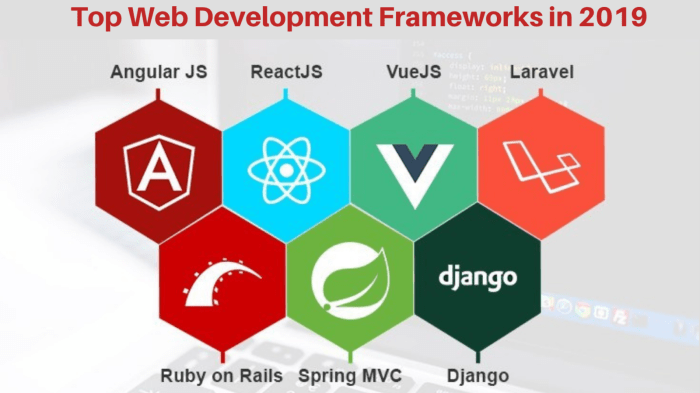
Frontend development focuses on the client-side aspects of a web application. This includes everything the user sees and interacts with directly in their web browser. Key technologies involved include HTML (for structuring content), CSS (for styling and presentation), and JavaScript (for adding interactivity and dynamic behavior). Frameworks like React, Angular, and Vue.js are commonly used to streamline frontend development, providing pre-built components and tools to accelerate the process.
A skilled frontend developer ensures a visually appealing, user-friendly, and responsive website that works seamlessly across different devices.
Backend Development
Backend development handles the server-side logic and data processing of a web application. It’s responsible for tasks such as data retrieval, processing user requests, interacting with databases, and managing security. Popular backend technologies include various programming languages (like Python, Java, Node.js, PHP, Ruby), frameworks (like Django, Spring, Express.js, Laravel, Ruby on Rails), and databases (like MySQL, PostgreSQL, MongoDB).
A backend developer ensures the application functions correctly, is scalable, and secure.
Database Technologies
Databases are crucial for storing and managing the data of a web application. They allow for efficient retrieval, modification, and storage of information. Different types of databases exist, including relational databases (like MySQL and PostgreSQL) which organize data in tables with rows and columns, and NoSQL databases (like MongoDB) which offer more flexible data structures. Database administrators (DBAs) are responsible for the design, implementation, maintenance, and security of these databases.
The choice of database technology depends on the specific needs of the application, considering factors like scalability, data structure, and query performance.
Software Development Lifecycle (SDLC) in Web Development
The Software Development Lifecycle (SDLC) Artikels the stages involved in creating and maintaining software. In web development, a typical SDLC might involve the following phases: planning and requirements gathering, design, development, testing, deployment, and maintenance. Each phase is crucial and involves specific tasks and deliverables. Agile methodologies, like Scrum, are commonly used to manage the iterative development process and ensure flexibility and adaptability to changing requirements.
Roles in a Web Development Team
A typical web development team comprises several roles, each with specific responsibilities. These include:
- Frontend Developer: Responsible for the user interface and user experience.
- Backend Developer: Handles server-side logic, data processing, and security.
- Database Administrator (DBA): Manages and maintains the databases.
- Project Manager: Oversees the project, manages timelines, and coordinates the team.
- UI/UX Designer: Focuses on the visual design and user experience of the application.
- Quality Assurance (QA) Tester: Tests the application to identify and report bugs.
The specific roles and responsibilities can vary depending on the project size and complexity. Effective teamwork and communication are crucial for a successful web development project.
In conclusion, the landscape of web development frameworks is constantly evolving, offering developers a rich array of tools to tackle increasingly complex projects. Understanding the strengths and weaknesses of various frameworks, coupled with adherence to best practices, is crucial for building high-quality, scalable, and secure web applications. By carefully considering project requirements and leveraging the vast resources available, developers can harness the power of frameworks to create innovative and impactful digital experiences.
Key Questions Answered
What is the difference between a front-end and a back-end framework?
Front-end frameworks (like React, Angular, Vue.js) handle the user interface and user experience, what the user sees and interacts with in a browser. Back-end frameworks (like Node.js, Django, Laravel) manage server-side logic, databases, and APIs, powering the application’s functionality behind the scenes.
How do I choose the right framework for my project?
Consider project size, complexity, team expertise, scalability needs, performance requirements, and long-term maintainability. There’s no one-size-fits-all answer; the best framework depends on your specific context.
Are frameworks necessary for all web development projects?
While not strictly mandatory for all projects, frameworks significantly benefit larger or more complex projects by providing structure, efficiency, and maintainability. Smaller projects might not require the overhead.
What are some common security vulnerabilities mitigated by frameworks?
Frameworks often include built-in security features to protect against common vulnerabilities like SQL injection, cross-site scripting (XSS), and cross-site request forgery (CSRF).


